
Frequently Asked Questions About LNG
Is LNG the same as liquefied petroleum gas?
No. LNG stands for liquefied natural gas and consists primarily of methane. In German, the term “LPG” is often used to refer to liquefied petroleum gas, which consists mainly of propane and butane. These two energy sources differ in composition, storage conditions, and uses.
Is LNG a fossil fuel?
Conventional LNG is produced from fossil natural gas. In principle, processed biomethane can also be liquefied. This is often referred to as bio-LNG. The origin and greenhouse gas footprint must be considered separately in each case.
What happens to LNG at an import terminal?
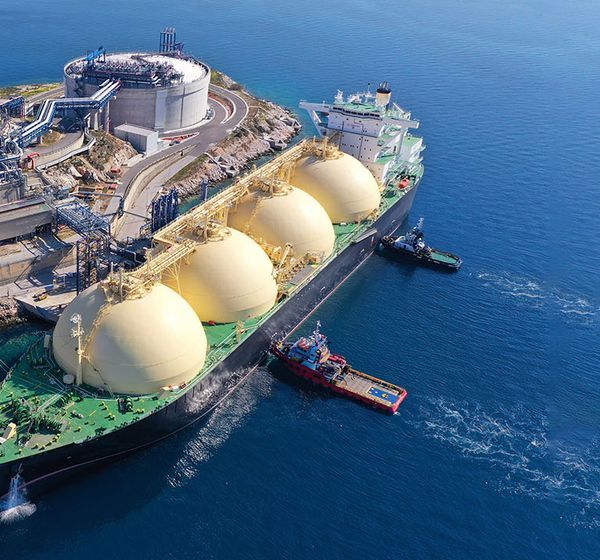
At an LNG import terminal, liquefied natural gas can be temporarily stored and then reheated. During this process, it changes from a liquid to a gaseous state. The natural gas can then be fed into the gas grid in accordance with technical requirements.
What is boil-off gas?
Boil-off gas is produced when heat causes a portion of the cryogenic LNG to vaporize. Depending on the plant and transportation technology, this gas is captured, utilized, re-liquefied, or otherwise handled in a controlled manner.
Can LNG also be produced from biomethane?
Yes. When sufficiently processed biomethane is liquefied, it becomes bio-LNG. Its technical applications can be comparable to those of conventional LNG, although the source of the raw material and the potential greenhouse gas footprint differ.