
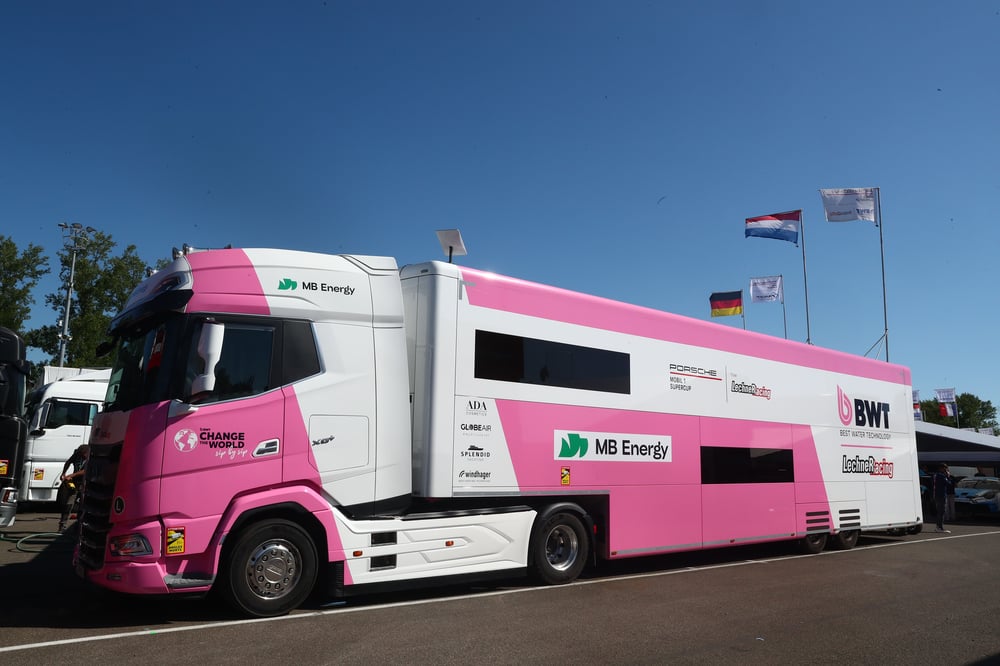
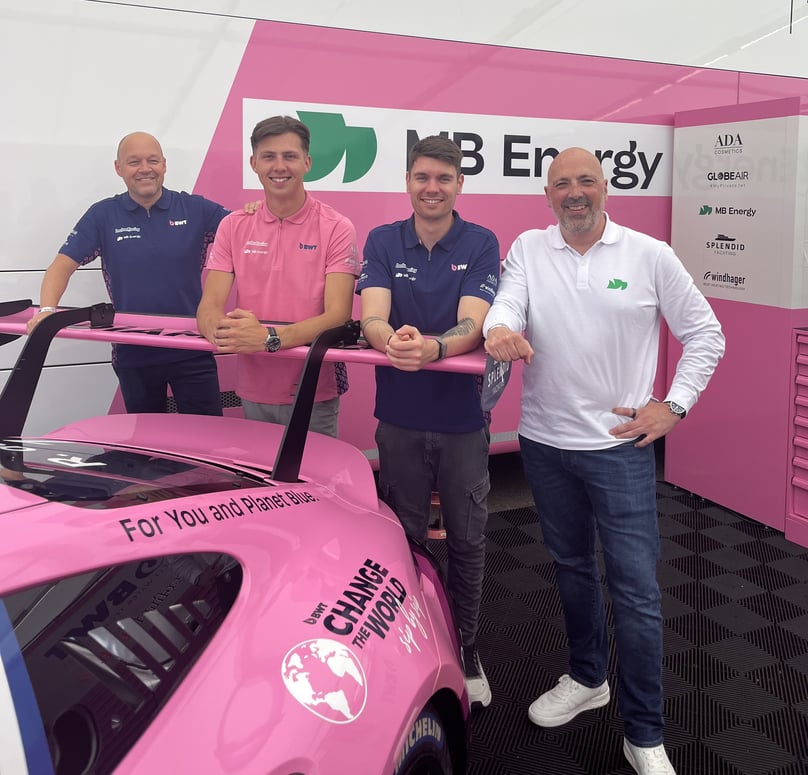
MB Energy and Lechner Racing can look back on another successful season in 2025. The partnership – under which MB Energy provides solutions for both measuring and reducing CO₂ emissions from transport logistics and Lechner Racing’s operations – has been successfully expanded and now encompasses not only the Porsche Supercup but also the calculation of the fuel’s carbon footprint in the Porsche Sprint Challenge Central Europe.
The partnership with Lechner Racing is a concrete example of the comprehensive range of services we offer our B2B customers. By tackling delivery and logistics processes as well as operational challenges, we demonstrate our ability to deliver practical solutions. The collaboration with Lechner Racing began with the introduction of HVO in a single lorry and has since evolved to encompass more comprehensive targets, energy management and CO₂ reduction strategies, including offsetting measures and efficiency improvements. This partnership not only benefits Lechner Racing by supporting their sustainability efforts, but also enables us to refine our approach and develop offerings that we can extend to other clients.
Our collaboration with Lechner Racing is a strong example of our expertise in delivering more sustainable transport solutions. The partnership not only illustrates our approach but also serves as a valuable case study that can be used to attract and win over further customers. Thanks to the increased visibility of MB Energy and our services in the market, we have successfully expanded our customer base and generated growth. The practical results and successes arising from our collaboration with Lechner Racing underscore the effectiveness of our offerings and position MB Energy as a provider of more sustainable logistics solutions.
Scope 2025
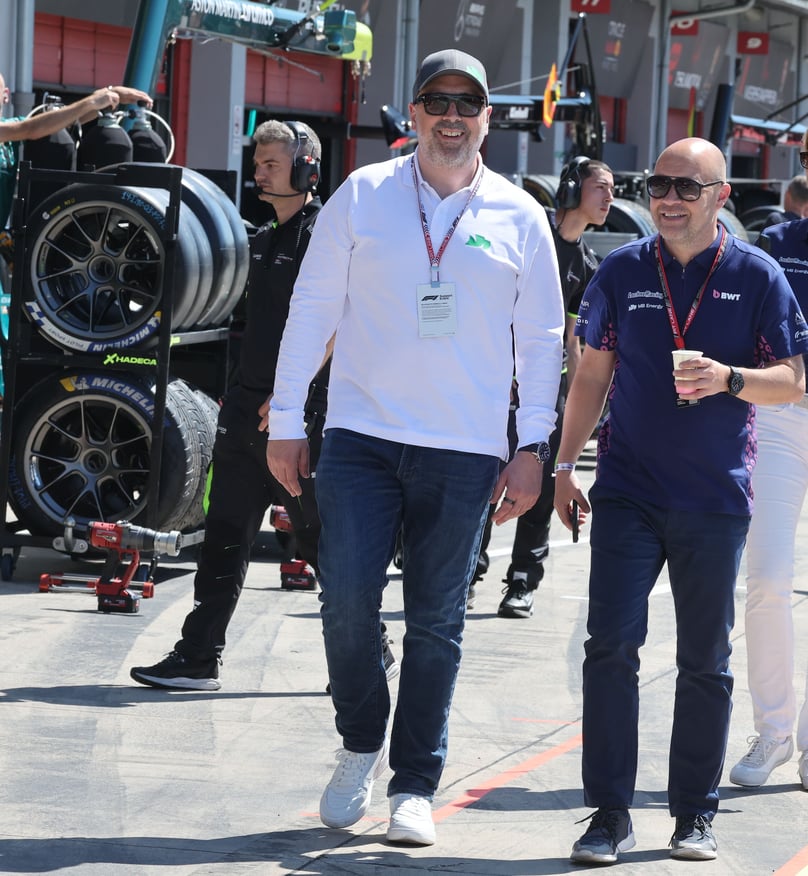
Over the course of a season, BWT Lechner Racing’s logistics vehicles are used to transport the team’s racing cars and equipment from its headquarters in Thalgau, Austria, to race tracks across Europe and back again. In total, the vehicles covered almost 37.8 thousand kilometres as part of the 2025 Supercup. Before the start of the season, the team introduced efficiency measures, which reduced the size of the fleet for Supercup operations and lowered overall fuel consumption.
The first race of the 2025 season took place at Imola, less than a week after the announcement of the rebranding from Mabanaft to MB Energy. Thanks to a strong team effort, the rebranding was implemented successfully and on time – on the race cars, the transport vehicles and the team kit.
MB Energy supplies Lechner Racing with renewable diesel (HVO100), thereby enabling the team to switch its lorry fleet away from conventional diesel fuel for the Porsche Supercup. In 2025, the scope was expanded to include further activities from special projects and initiatives such as the Porsche Sprint Challenge Central Europe. This means that, wherever possible, the logistics for additional projects have been switched to HVO.
In the run-up to the last season, the scope of the partnership was expanded tocarry outvoluntary accountingof Lechner Racing’smaterial Scope 1 and Scope 2 emissions[1] , in order to gain a deeper understanding of the company’s direct emissions footprint, identify opportunities for improvement and strengthen efforts to offset emissions through voluntary emission reduction certificates (VERs). These efforts, which also encompassed operations at the headquarters in Thalgau, were continued during the 2025 season.
In addition, fuel emissions from the racing car fleet were systematically measured and offset accordingly using VERs. In 2025, race car emissions were recorded and offset by VERs for both the Porsche Supercup and the Porsche Sprint Challenge Central Europe – this included both the e-fuels used during the Supercup race weekendsas well as the fossil petrol used on test days for both the Supercup and the Sprint Challenge Central Europe.
Achievements in 2025
In total, 8,800 litres of renewable diesel (HVO100) were delivered directly to Lechner Racing’s depot during the 2025 Supercup season, compared with 9,600 litres in the 2024 season. At the same time, Lechner Racing was provided with Tankpool24 (TP24) fuel cards for its Supercup fleet, offering them an additional option to refuel conveniently at TP24 filling stations across Europe, thereby further simplifying logistics and ensuring the uninterrupted use of renewable diesel (HVO100). Through the use of Renewable Diesel (HVO100), aCO₂ emissions reduction of ~70 tCO₂ewas achieved in 2025 compared with a benchmark of 100% fossil fuel consumption, which is more than double the emission reduction of ~30 tonnesof CO₂ein 2024.
In 2025, VERs were used to offset the remaining 53 tonnes ofCO₂ emissions, whereas in 2024, 90 tonnes had still been offset by VERs.
“The partnership with Lechner Racing is a fantastic opportunity for MB Energy to demonstrate our expertise in low-carbon mobility solutions, and is further proof of our commitment to supporting our customers on their journey towards decarbonisation,” says Jon Perkins, CEO of MB Energy.
“We want to help our customers by offering bespoke solutions to reduce theirCO₂ emissions,” explains André Cardoso, Senior Vice President of Sales & Marketing at MB Energy. “The partnership with Lechner Racing gives us an opportunity to demonstrate how this can be achieved through a combination of fuel supply, emissions monitoring and emissions offsetting.”
[1] Scope 1: Emissions from sources owned by the company. Scope 2: Market-based emissions from purchased energy.