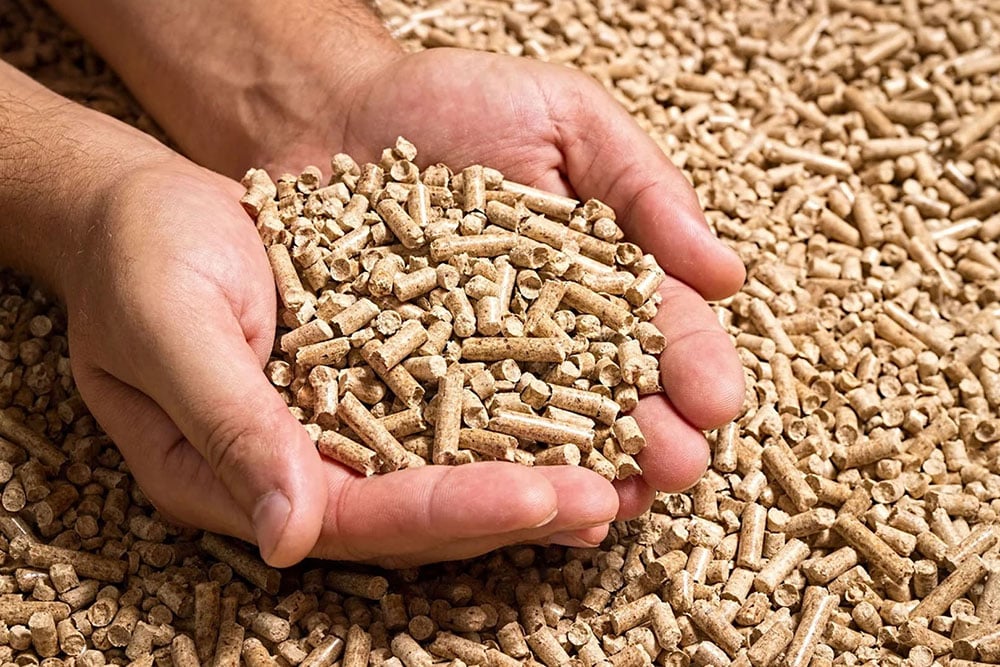
Anyone who heats with pellets soon faces a key question: How much does a single-family home consume in pellets, and how many metric tons should you budget for each year? Annual consumption affects not only heating costs but also the size of the storage area, the appropriate order quantity, and the timing of the next delivery.
The good news: You can easily estimate the annual pellet consumption for a single-family home with just a few pieces of information. The key factors are living space, insulation standards, heating habits, and whether the pellet heating system is also used to produce hot water. In this article, you’ll find realistic guidelines and tips on what factors may increase or decrease your personal needs. This will help you better plan your storage space, ordering schedule, and budget.
Average Pellet Consumption in a Single-Family Home: Guidelines
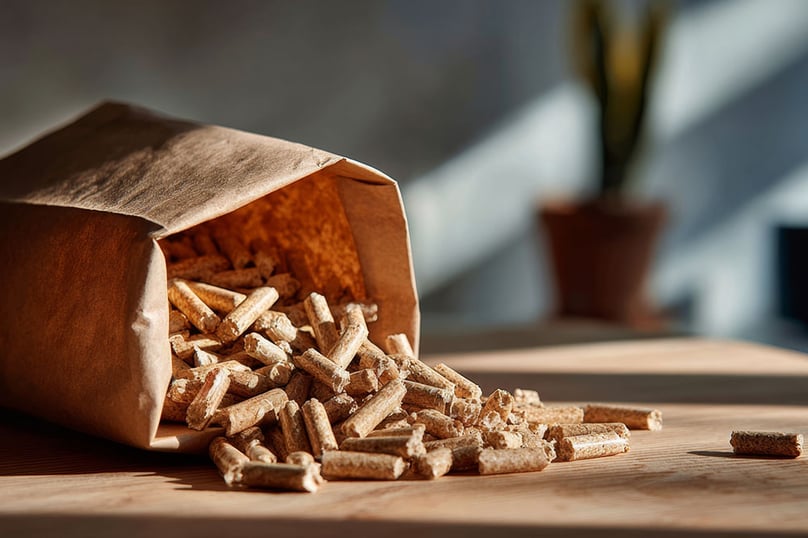
Average pellet consumption in a single-family home is usually between 3 and 6 metric tons per year. However, depending on the building’s standard, the actual figure may be significantly lower or higher. The home’s energy efficiency, heating habits, and hot water production have a particularly strong impact.
The following table shows guidelines for a single-family home with approximately 150 m² of living space, including hot water production. It serves as a general guide but does not replace an individual calculation.

| Building Standard | Annual Pellet Consumption (Approximate Value) | Energy Demand (Guideline) |
| New construction / low-energy home | approx. 1.5–2.5 metric tons | approx. 40–70 kWh/m²a |
| Renovated existing building | approx. 3.0–4.5 metric tons | approx. 80–120 kWh/m²a |
| Unrenovated building | approx. 5.0–7.0 metric tons | approx. 150–250 kWh/m²a |
Note: All figures are approximate. Your actual annual pellet consumption depends on insulation, heating habits, region, hot water production, and system type.
Factors Affecting Annual Pellet Consumption in a Single-Family Home
Even with the same living area, two single-family homes can have very different consumption figures. The following factors are crucial in this context:
- Building insulation and windows: Poorly insulated homes lose more heat and therefore require more fuel. Good insulation, modern windows, and airtight connections can significantly reduce pellet consumption.
- Hot water production: If hot water is produced by the pellet heating system, the annual demand increases noticeably—plan for about 15 to 25 percent additional consumption.
- Heating behavior: Maintaining constant room temperatures and lowering them at night saves energy compared to continuous operation at a high setting.
- Region and heating season: In colder regions or higher elevations, consumption is significantly higher than in milder regions.
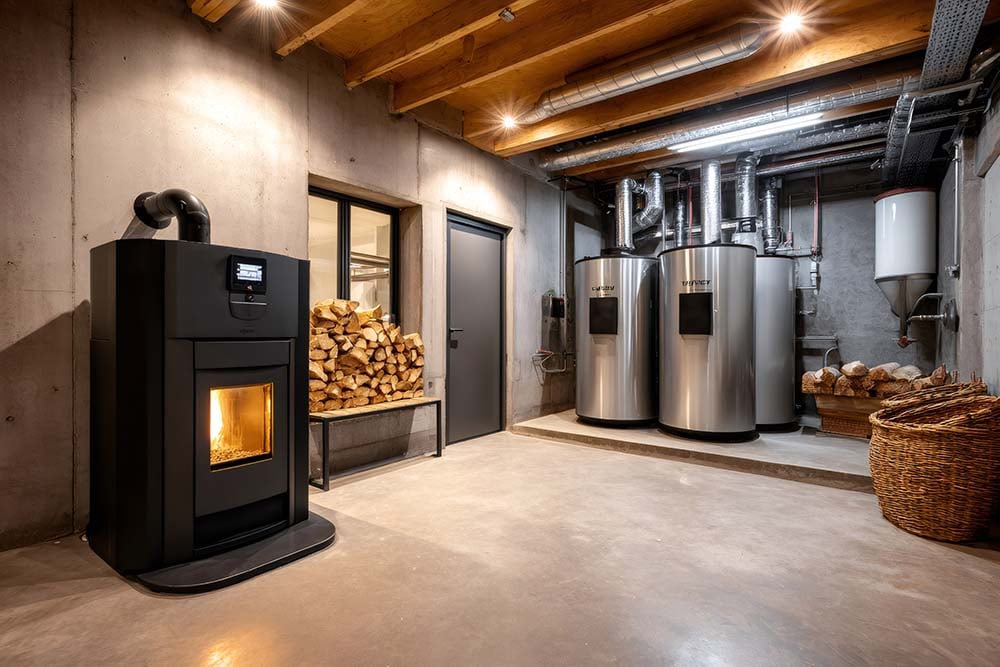
- Pellet Stove vs. Central Pellet Heating System: A pellet stove used as supplemental heating typically consumes only 0.5 to 2 metric tons per year, depending on usage and living area. A central pellet heating system covers the entire household and therefore falls within the range of the above-mentioned guidelines.
If you’re only using a stove, you should calculate your annual consumption separately rather than using the figures for a full heating system.
Reducing Consumption: Five Practical Tips
A realistic annual requirement is the starting point—these measures can often help reduce consumption even further:
- Optimize the heating curve and night setback: A correctly set heating curve ensures that the system generates only as much heat as is actually needed.
- Have the system’s hydraulic balancing checked: When all radiators receive the correct amount of water, the system operates more efficiently and evenly.
- Insulation and drafty windows: Draftywindows, poorly insulated areas, or thermal bridges increase consumption. Even targeted improvements can help save heating energy.
- Consciously manage hot water usage: Shorter shower times, water-saving faucets, and an appropriate hot water temperature can reduce the additional demand for pellets.
- Maintain the system regularly: A well-maintained pellet heating system operates more reliably and efficiently and generally consumes less fuel.
Calculate your annual fuel requirement now and include it in your planning
If you know how much yourannual pellet consumption is expected to be, you can plan your delivery quantities and storage accordingly. Use the pellet price calculator on mbenergy.com to learn more about product options and what matters most when buying pellets.
As your regional energy partner, we support you in ensuring a predictable supply of wood pellets: bulk pellets are suitable for central heating, while bagged pellets are ideal for smaller needs. This keeps your heat supply predictable—from your initial annual requirement all the way to your next pellet delivery.